
Ohio County Arrest Log Availability
Ohio County publishes no official 72-hour, weekly, or rolling arrest blotter. The sheriff's site posts no multi-day list. Beaver Dam, Hartford, and Fordsville departments offer no city arrest logs either. What exists is the detention center's current Inmate Roster. It answers one question: who is held right now. It is not an archive. A released or transferred person drops from view while the booking and arrest record still exists.
So the time frame matters. A live roster covers present custody. An arrest log asks who was booked across a span. A court record tracks what happened once charges were filed. News coverage picks which events to publish. Each source does a different job, and none can stand in for a complete log.
Read an Ohio County Blotter
Start with the date and what it actually measures. A timestamp on a private page may mark publication or ingestion rather than the arrest itself. A newspaper brief might summarize a sheriff report days after the fact. Booking can happen hours after the arrest too. Keeping those labels straight prevents a chain of errors.
- Define the date range and note whether the search concerns arrest, booking, custody, or publication.
- Check the official JailTracker roster for anyone who may still be held in Ohio County.
- Review the arresting agency or jail record for the actual booking event and alleged charge.
- Use the Ohio County Circuit Court Clerk or CourtNet for the filed case and later disposition.
- Consult dated local news or unofficial archives only as secondary leads, then verify each lead.
- Request an older record from the proper custodian when the public window has closed.
The Ohio County recent arrests hub lays out the countywide source chain. For events from just today, Ohio County 24 Hour Arrests follows a different live-custody workflow.
Ohio County Log Entry Fields
Kentucky has a Local Government General Records Retention Schedule. It describes a Daily Record of Arrests. The record is built from booking information. It can include the fields below but holds no court data. Private archives may add their own labels. Treat those extras as the site's presentation until an official record confirms them.
| Field | Meaning and limit |
|---|---|
| Booking number | An intake identifier, not necessarily a court case number. |
| Name and identity details | Used to distinguish records; similar names require careful review. |
| Arrest or booking date | Check the exact label because these events may occur at different times. |
| Arresting officer or agency | Identifies who made or reported the arrest, not the final court. |
| Charge or offense | The charge recorded at intake; it may later change. |
| Photograph | A booking image may exist, but public display is not guaranteed. |
The official Record of Arrests can also hold an address, physical description, location, booking details, and any expungement order. Exemptions, redactions, juvenile protections, sealing, and expungement all limit what gets released. The schedule only describes fields an agency may keep. It does not authorize publishing every identifier.
Ohio County News Arrest Briefs
The clearest local-news source is the Ohio County Times-News. Its historical "Arrests made" briefs credited sheriff-department reports. They also named people lodged at the Ohio County Detention Center. That pattern helps trace a dated arrest event. But the paper publishes weekly, and its web pages are not a full blotter. Coverage can be selective, delayed, or limited to reports it chooses to summarize. The Times-News breaking-news section shows the layout used for current local coverage.

The Ohio County Monitor also reports on specific events. Its 2018 article on a Centertown bank-robbery suspect shows the paper's law-enforcement coverage style, not a standing blotter or tip program. A news story can point you to an agency and a date. The jail and court still hold the custody and case details.
Unofficial Ohio County Arrest Archives
Private county pages can preserve dates after an official roster entry disappears. Always check official sources first. Busted Newspaper offers a "Most recent" list with booking timestamps and pagination. Recently Booked describes a rolling recent window with multiple daily refreshes. Mugshots.zone carried dated archive navigation. It reached back to January 2021 and beyond. Arrests.org, Mugshots.com, and ArrestCloud showed varying county record fields and older entries. The Busted Newspaper Ohio County page illustrates that mix.
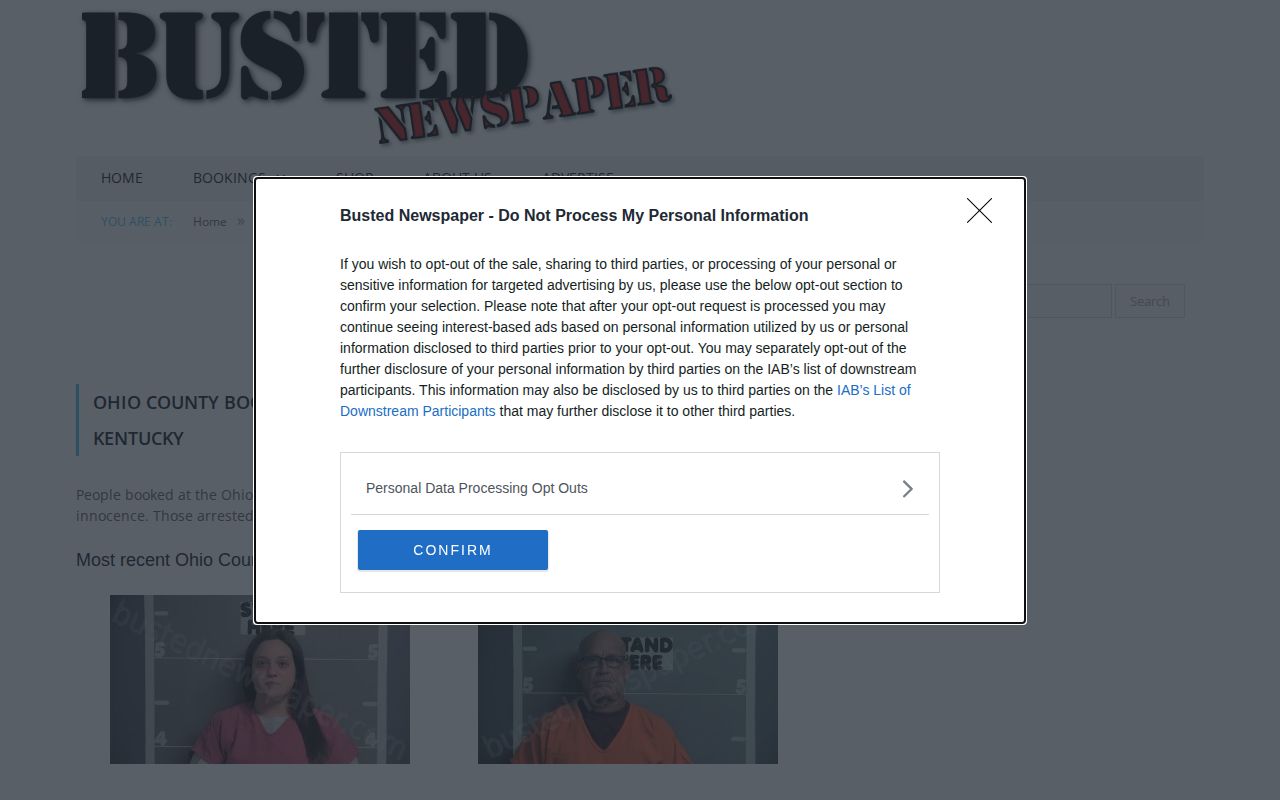
Archive depth varies from site to site. Entries may be duplicated, stale, or removed. Some linger after the county's public roster changes. A private page cannot confirm current custody, warrant status, identity, or the final charge. Verify any lead with the detention center first, then the court.
Ohio County Posting Date Quirks
Ohio County posts no weekend, holiday, or daily schedule. Some claim the county batches weekend bookings for a Monday release. That claim would simply be wrong. A gap in entries could mean a release, delayed intake, or a transfer. It could also reflect selective news coverage, a dead old link, or a private site's own update rhythm. Each source has to explain its own dates. One more wrinkle: the current county roster runs on vendor JailTracker. An older InmateList address no longer resolves. That migration leaves stale bookmarks and search results behind. Always return to the official detention-center roster page before assuming a record is gone.
- Arrest date
- When law enforcement took the person into custody.
- Booking date
- When a detention facility completed or recorded intake.
- Publication date
- When a newspaper or website posted its item.
- Disposition date
- When the court entered a later result or order.
Note: Record each date with its label and source, because mixing them can distort the true sequence of events.
Older Ohio County Arrest Records
Online rosters vanish quickly. Kentucky keeps paper arrest files far longer than any website does. Under the state retention schedule, the Daily Record of Arrests may be destroyed once the agency no longer needs it. Other series run much longer. Felony arrest records stay on file for 50 years, while misdemeanor files are kept for five. The closed Mug Photographs series carries an 80-year term. Those clocks govern what agencies hold. They say nothing about what a search engine still displays or how long a booking stays visible on JailTracker. Some material may have reached the archives. For that, the Kentucky Department for Libraries and Archives request page walks through the process.
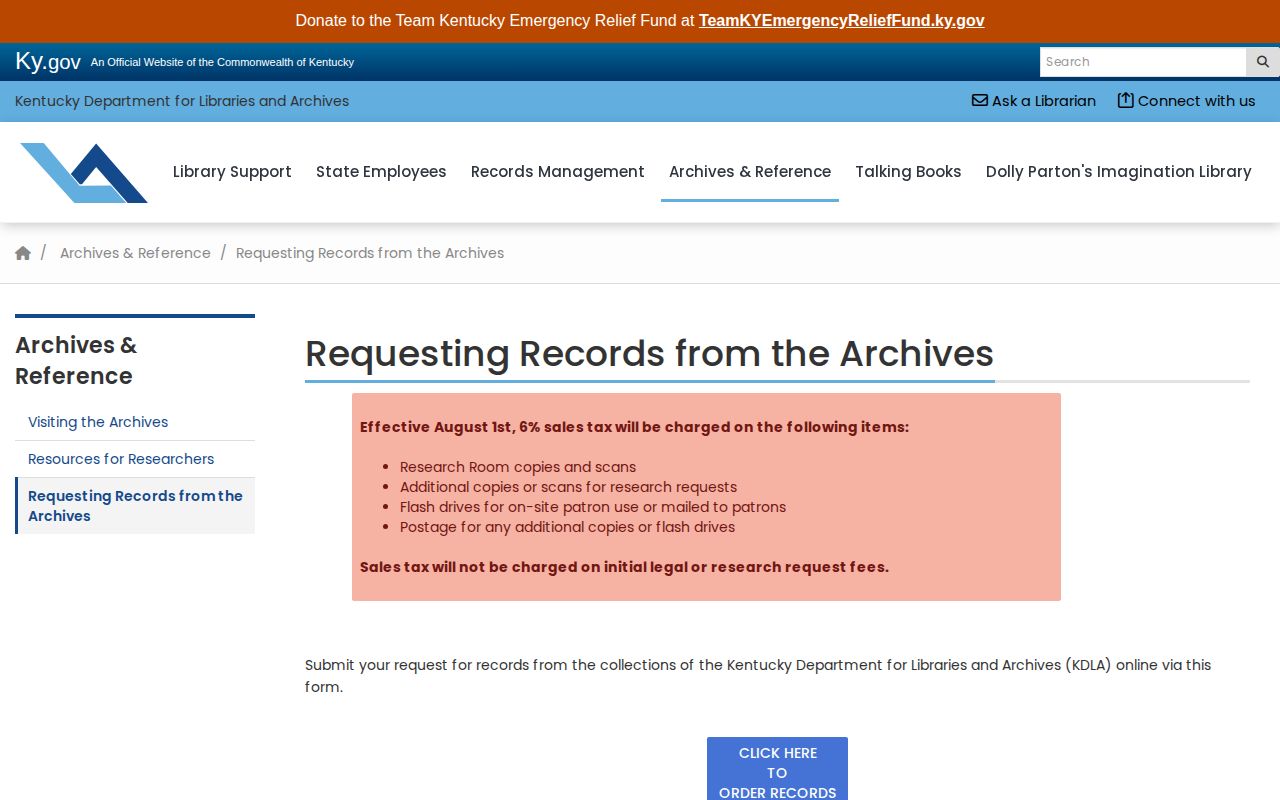
Archived holdings rarely include a recent Ohio County booking photo. Start with the agency that made the arrest. That means the jail, the sheriff, or the city police department. Give staff a name and a tight date range. Include the arresting agency and the type of record you want. If the item is gone, ask which retention series covered it. Also ask whether it was transferred or legally destroyed. Older court matters go to the Ohio County Circuit Court Clerk first, not KDLA. The State Archives puts only a small slice of holdings online. Nothing shows JailTracker sends booking images there automatically.
Request an Ohio County Arrest Log
The Ohio County Detention Center handles jail intake records. It sits at 108 East Washington Street, Hartford, Kentucky 42347, and answers at 270-298-4455. Sheriff-created arrest records sit elsewhere. They may rest with the Ohio County Sheriff's Office at 301 South Main Street, Hartford, KY 42347, phone 270-298-4444. Ask first which office is the true custodian.
A narrow request works better than a demand for every arrest. Name the date range and the person or incident. Say whether you want a daily list or an arrest record. Add the arresting agency if you know it, plus your preferred format. When an agency withholds something, ask it to cite the exemption or retention reason. A booking log shows no conviction or dismissal. Seek the court case record from the clerk for that outcome.
Note: Kentucky law lets agencies withhold or redact certain categories, including juvenile identity, sealed or expunged material, and active law-enforcement content. A missing entry can reflect the law. It may also mark a change in custody rather than an error.
Public Record Search
Sponsored Results